Virtual Cycling in Sports Clubs: how does that fit in existing sport policy? #

With the International Olympic Committee announcing the Olympic Esports Games for the near future (although postponed for 2027) and federations like the UCI investing in new disciplines, digital forms of sport are becoming increasingly visible. While we often see individual athletes using platforms like Zwift or MyWhoosh from home, less is known about how traditional voluntary sports clubs are adopting these innovations, for example as part of their offered services. How about a Sunday club ride on Zwift when its raining?
Are clubs seeing virtual cycling as a way to be more competitively and performance focussed, or do they see it as a method to open their doors to a wider audience?
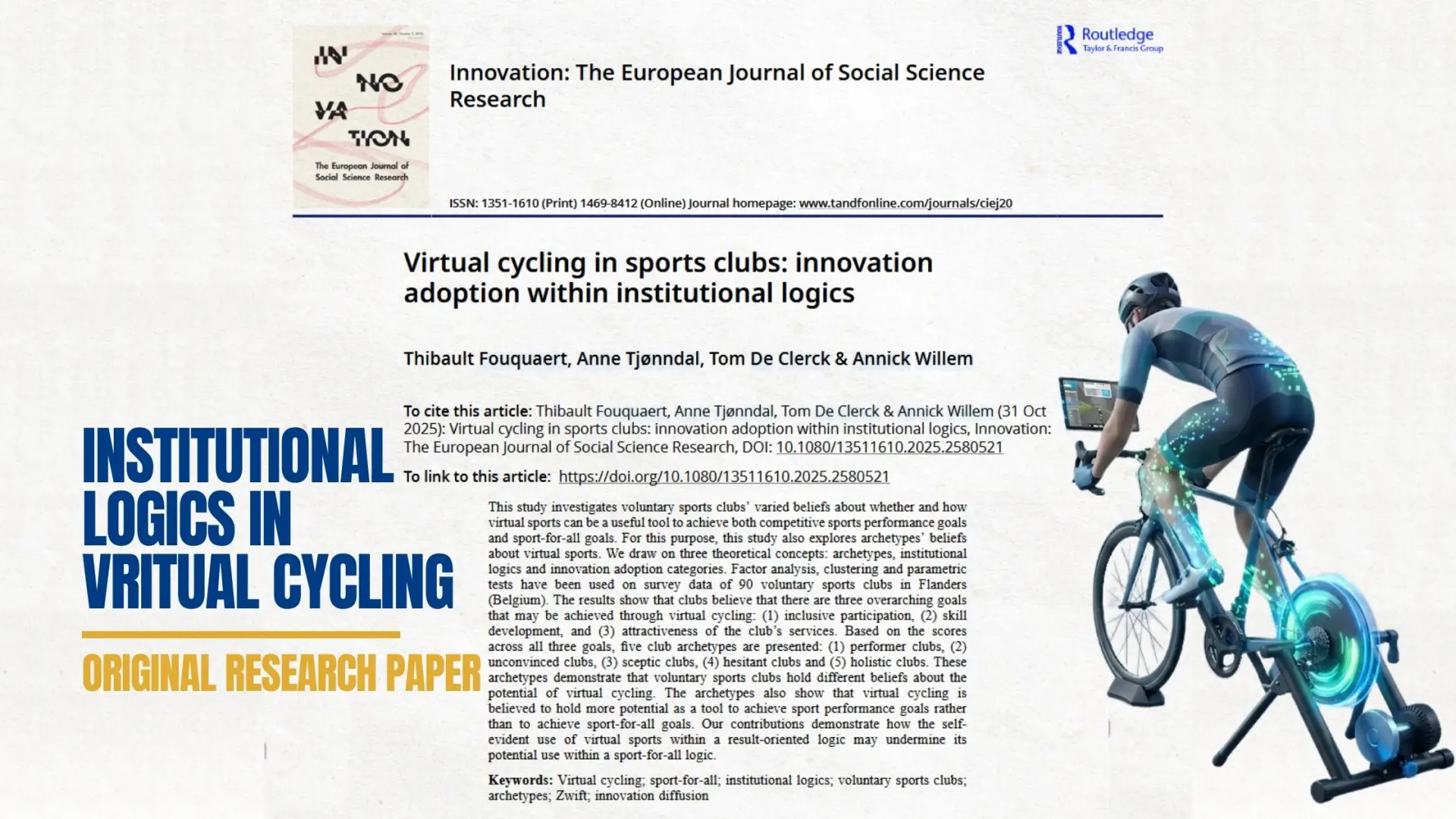
Our latest research, conducted among 90 cycling and triathlon clubs in Flanders, explored clubs’ beliefs about virtual cycling. By examining clubs’ beliefs, we aimed to understand (1) if virtual cycling is perceived as a tool for sport-for-all or primarily for performance enhancement, (2) how that situates within existing policy, and what it (3) means for future sport policy.
The Perceived Potential of Virtual Cycling #
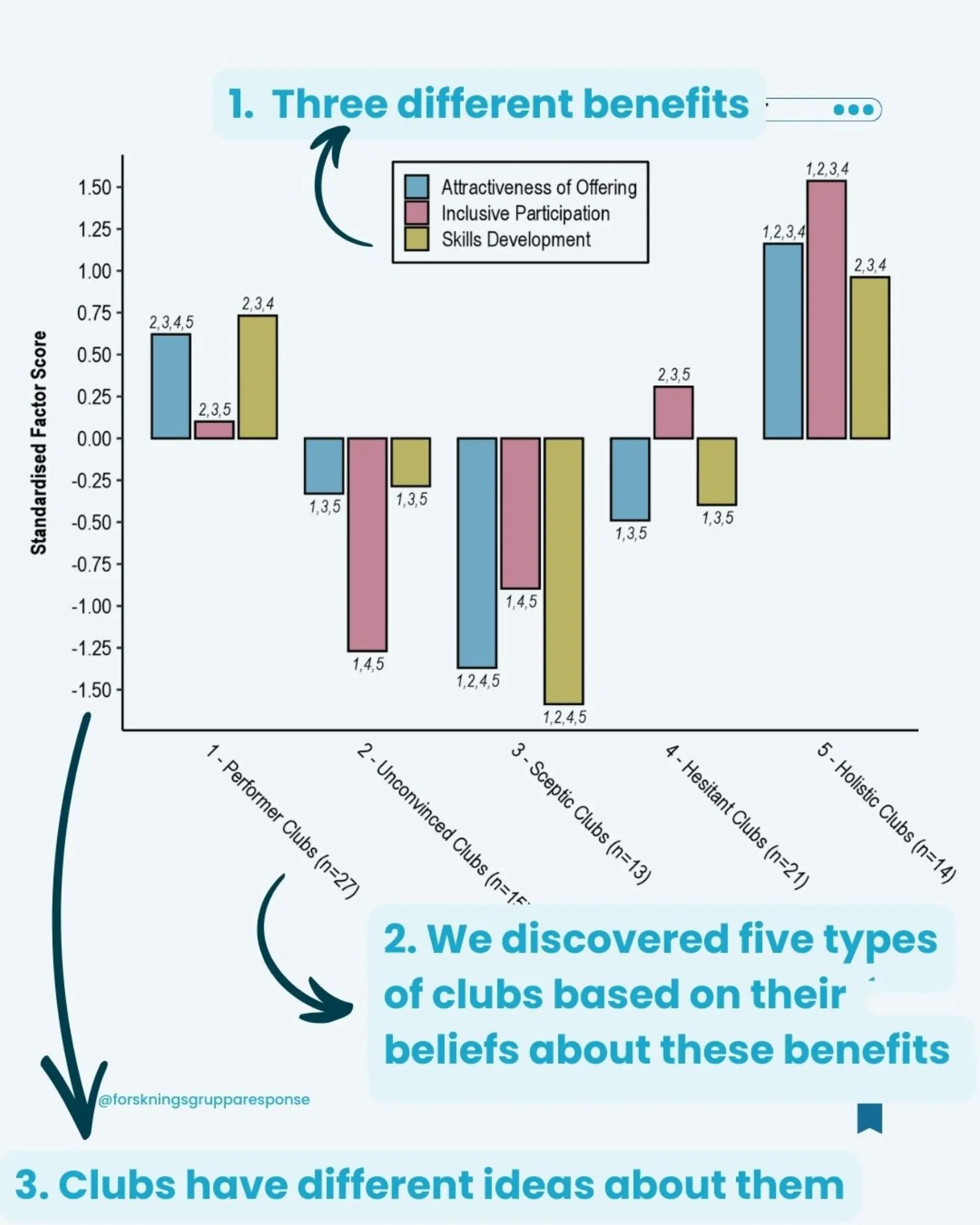
When we surveyed clubs about what virtual cycling could bring to them, their responses revealed three distinct types of perceived benefits and club goals:
- Skill development: This was viewed as the most achievable goal. Clubs largely recognized virtual cycling as a useful tool for scientific training, technique improvement, and safe practice.
- Attractiveness of their offer: Clubs also saw potential in using virtual cycling to modernize their services, making the club more appealing and adding a “fun” factor for members.
- Inclusive participation: This area was met with the most hesitation. On average, clubs were less convinced that virtual cycling could help reach specific target groups, such as the elderly, youth, or people with disabilities, compared to the other goals.
Five Perspectives How Clubs View Virtual Cycling #
Not all clubs view these benefits in the same way. Based on how they rated the potential of virtual cycling across three beliefs (i.e. their goals with virtual cycling), our analysis identified five “archetypes” of clubs:
- Holistic Clubs: These clubs are the most optimistic. They believe virtual cycling holds high potential across the board—not just for skills and attractiveness, but significantly for inclusive participation as well.
- Performer Clubs: These clubs see the value for skill development and making their offer attractive, but they remain neutral regarding the potential for inclusion.
- Hesitant Clubs: This group holds a generally neutral stance, neither strongly agreeing nor disagreeing that virtual cycling offers significant benefits in any of the three categories.
- Unconvinced Clubs: While these clubs are neutral about the potential for skills and attractiveness, they are specifically negative about the idea that virtual cycling can improve inclusion.
- Sceptic Clubs: These clubs tend to reject the utility of virtual cycling entirely, viewing it as unlikely to achieve any goal for them.
What This Suggests for Virtual Sports #
While this study focused strictly on virtual cycling, the findings offer interesting suggestions for the broader field of virtual sports.
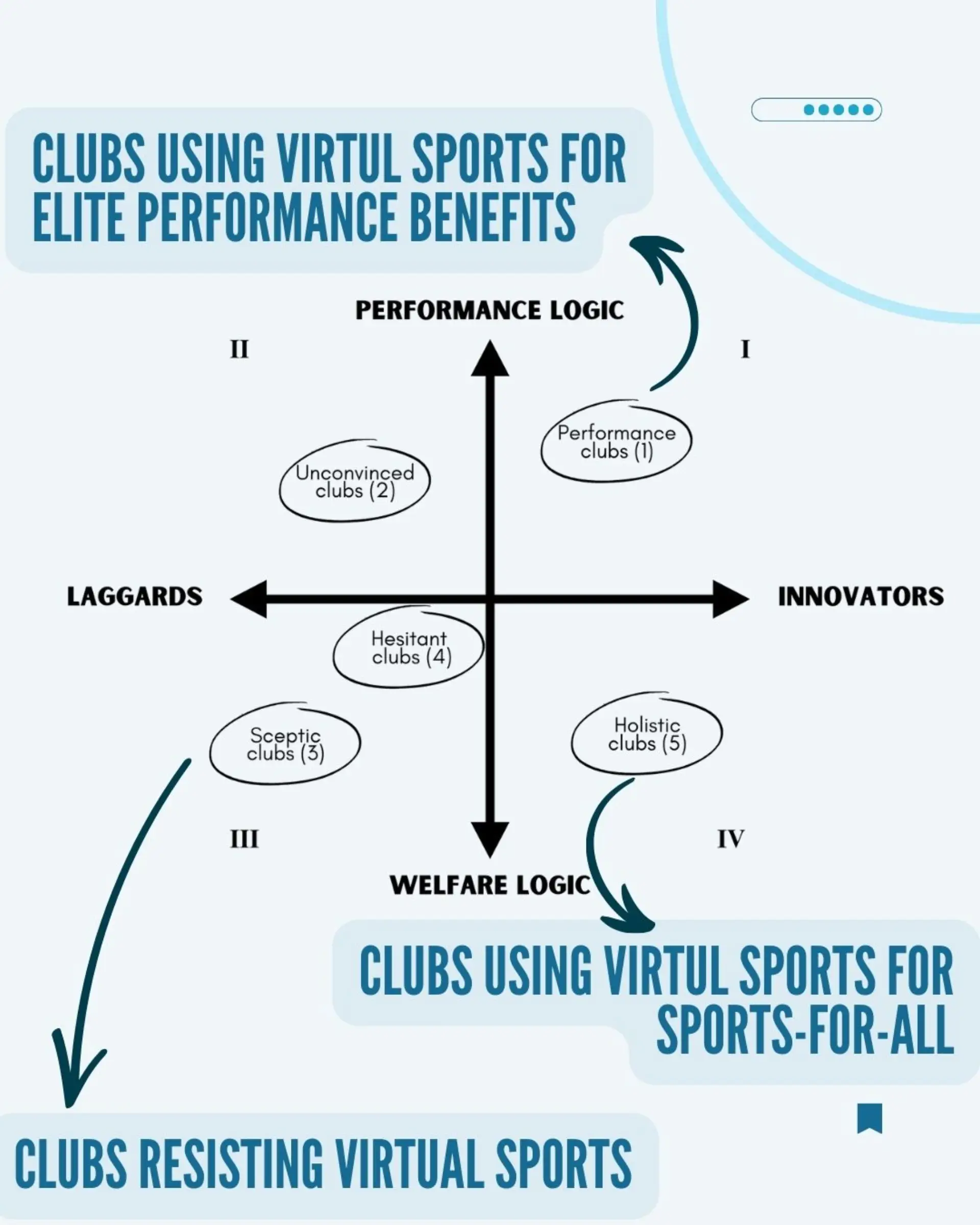
The data suggests that, currently, the “performance logic” (i.e. the drive for better results and talent development by sport policy implementers) may be the dominant lens through which clubs view these technologies. Because clubs perceived “Skill Development” as the most achievable goal, there is a possibility that the self-evident use of virtual sports for performance could overshadow their potential for social inclusion and sport-for-all.
However, the existence of Holistic Clubs suggests that such undermining is not always the case. It is possible for clubs to view virtual cycling (and perhaps other virtual sports) as a multi-purpose tool, one that supports competitive goals while simultaneously fostering a more inclusive environment.
As virtual sports continue to evolve, one of the many challenges for federations and policymakers will be to support clubs in unlocking this “sport-for-all” potential, ensuring that virtual sports technology serves everyone willing to participate in sport as much as it serves elite athletes.
Full paper #
You can access the full text of the paper using the following (limited free copy) link: Fouquaert, Thibault, Anne Tjønndal, Tom De Clerck, and Annick Willem. 2025. ‘Virtual Cycling in Sports Clubs: Innovation Adoption within Institutional Logics’. Innovation: The European Journal of Social Science Research, 2025, 1–22. https://doi.org/10.1080/13511610.2025.2580521.